
Case-based learning describes instructional methods in which an expert describes experiences or cases, to assist others to learn and reason in similar situations. This allows novices to transfer the cases into knowledge that can be recalled and utilized in flexible ways. Cases allow a learner to assign meaning and context to a situation, facilitating problem-solving in similar or new situations. The cases are essentially expert advice framed as a story.

Video clips can be viewed multiple times to illustrate different points. It is fine to use the same clips or cases multiple times in multiple ways. This models the cognitive process of reusing and revising cases, which is utilized in case-based learning.

Ensure learners understand the practice setting and conditions of the client in which the case is situated. This assists learners to reflect on the case, identify learning opportunities of the case, and encode the case for future retrieval and revision.

Ask the simple questions about the case first. Then, increase the number of video clips viewed, the complexity of the cases, or the difficulty of the learning activities. Build on knowledge that the learners have already gained in the classroom.

First determine what learners should gain by viewing the case, then choose the appropriate videos to illustrate that objective. These can be simple to complex, and may depend on the course in which the videos are used.
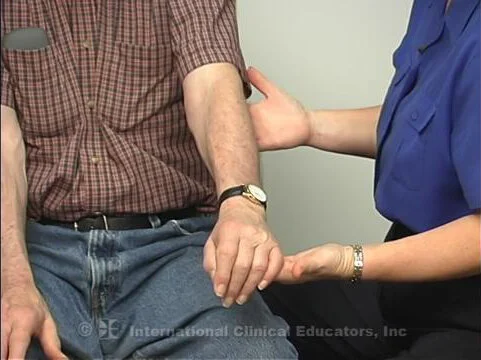
Video clips can be viewed multiple times to illustrate different points, or additional clips of the same client can be utilized over time to meet different learning objectives. Many curricula build upon foundational skills and expect more complex analytic, evaluative or creative skills demonstrated by the learner over time.

When using cases to complete a complex assignment, first model this in the classroom as a discussion. View the videos together and point out salient points as they occur in the videos.
Next, use the same assignment / learning activity with a new case that is given to small groups. Videos can be watched by learners out of class, then they can meet (in or out of class) to discuss the assignment.

This article describes comparison of video and text cases as they influence clinical reasoning skills in entry-level occupational therapy learners.


